Today's
EarthStation1.com 15% Off Commemorative Memorial Title: TV
Commercials: The Cable Age Classics Vol. 4 MP4 Video Download DVD
Today, January 29, 2026
January 29: National Corn Chip Day: --
Grab the queso or salsa and celebrate! Recognized each year across
the country on January 29, National Corn Chip Day encourages corn
chip lovers to whip up their favorite dips and toppings. The corn
chip or friotes are not to be confused with the tortilla chip.
Both are made from cornmeal which is baked or fried in oil.
Differing steps for processing the corn separate the tortilla from
the corn chip. The corn for a tortilla chip is soaked in a
lime-water solution that breaks down the hulls. This process
creates a crisper, milder chip. A corn chip is sturdier with a
stronger corn flavor. Both were popular snacks originating in
Mexico. There are two men credited with patenting and marketing
the corn chip in the United States. First, Isador J. Filler often
ate a tostada (a hard corn tortilla with toppings) while traveling
in San Antonio, Texas as a salesman. He struck on the idea of
making them in rectangles and marketing them as a chip. In 1932 he
patented his concept. Around the same time, Elmer Doolin was also
traveling in San Antonio and was enjoying friotes. According to
the story, he paid 100 USD for the recipe. Experimenting in his
home until he created the ideal chip, Doolin then started selling
them from the back of his Model T Ford. When he began
mass-producing them under the name of Frito Corn Chips, they were
a hit. In 1945, Doolin came to an agreement with Herman Lay (of
potato chip fame) to distribute Doolin's Fritos across the
country. The two companies merged in 1959 after Doolin's death. To
observe National Corn Chip Day, Create a topping buffet with
everyone's favorite toppings. Include jalapenos, cheese, olives,
queso, seasoned shredded pork, chicken or steak, onions, tomatoes,
sour cream, and guac. Dip it! Some of you are looking for hot and
spicey while others like it light and fresh. Get the cheese
dipping, layers, melty, herbaceous, flavor party started. Pack
them up! Sneak corn chips into your loved one's lunch bags. Add
cheese slices or a container of their favorite dip. Stick a corny
note to it. You know, something like this: Chip, chip, hooray!
It's National Corn Chip Day! (It even rhymes.) This one is a real
winner: It's nacho average holiday, #NationalCornChipDay. Now if
this doesn't just guac their world, we don't know what will. Be
sure to chip in by using #NationalCornChipDay when posting about
this to social media! Keep exploring the day by discovering more
chip and dip combinations to enjoy. We have been celebrating
National Corn Chip Day since at least 2002. On Sale @ 15% Off
Discount Till Midnight PT!
https://store.earthstation1.com/tv-commercials-the-cable-age-classics-vol-4-mp4-video-download-d44.html
Today's
EarthStation1.com 15% Off Commemorative Memorial Title: The
Whistler Crime & Mystery Radio Drama MP3 DVD Download USB
Drive
Today, January 29, 2026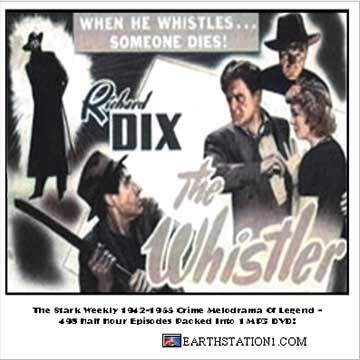
January 29: National Puzzle Day: -- An
annual recognition of how exercising our brains with puzzles is
just one of its many benefits! Whether it's a crossword, jigsaw,
trivia, word searches, brain teasers or Sudoku, puzzles put our
minds to work. Studies have found that when we work on a jigsaw
puzzle, we use both sides of the brain. And spending time daily
working on puzzles improves memory, cognitive function, and
problem-solving skills. Word searches and crossword puzzles have
the obvious benefit of increasing vocabulary and language skills.
Sudoku, a puzzle sequencing a set of numbers on a grid, exercises
the brain as well. By testing memory and logical thinking, this
puzzle stimulates the brain and can improve number skills. Puzzles
also offer social benefits. When we work on these brain teasers
with someone, we improve our social interactions. Whether we join
a group or play with our children, those interactions keep us
socially active and teach our children social skills, too. Even
working them quietly together provides an opportunity to focus the
mind in a meditative way that isn't forced. The bottom line is,
puzzles stimulate the brain, keeping it active, and practicing its
skills. Invite a friend to put a puzzle together with you. Try a
new puzzle game or revisit an old one. Create a puzzle game. And
use #NationalPuzzleDay to post on social media! In 2002, Jodi Jill
created National Puzzle Day as a way to share her enjoyment of
puzzles. As a syndicated newspaper puzzle maker and professional
quiz maker, Jodi Jill developed classroom lesson plans especially
for the observance and the popularity has grown year after year.
On Sale @ 15% Off Discount Till Midnight PT!
https://store.earthstation1.com/the-whistler-radio-mp3-dvd-complete-broadcast3.html
Today's
EarthStation1.com 15% Off Commemorative Memorial Title: Berkeley
In The Sixties DVD, MP4 Video Download, USB Flash Drive
Today, January 29, 2026
January 29: Freethinkers Day (Thomas
Paine Day, Common Sense Day): -- What are your thoughts about
celebrating Freethinkers Day annually on January 29? Are you ready
to open up your mind to new odds and ideas? Freethinkers Day is a
day when people are not only entitled to think outside the box but
are even cheered on to do so. In some places, it is also called
Thomas Paine Day, or Common Sense Day. It encourages people all
over the world to have the freedom to think and express
themselves. Freethinkers Day is observed on the birthday of Thomas
Paine. Paine is a well-known thinker whose works and books, which
expanded on a philosophy of enlightenment, enormously affected the
course of the French and American revolutions. Paine was a noble
and bold man whose entire life work was inspiring and a strong
motivation for those who yearned to find their independence. His
efforts especially promoted the rejection of abstract authority
that symbolized power and self-promotion over motive. Although
Paine was English-born, at the request of Benjamin Franklin, he
came to America in 1774. Paine's many significant books and
pamphlets throughout his life included "Common Sense,"
"The Age of Reason," and "The Rights of Man."
He was also one of the first persons to call for universal human
rights and an end to slavery. Paine's writing has inspired a lot
of other activists to seek their political, economic, and social
progression. Although Paine rose to prominence hundreds of years
ago, it was only until the 1990s that he was acknowledged with a
day. "The Truth Seeker" magazine initiated the
celebration of this day on January 29, as a celebration of Thomas
Paine's memorable history and birth on January 29, 1737. The sole
objective of this day is to bring around education and awareness
as well as the common benefits of freedom and liberty. A symbolic
way that the magazine suggested the day be celebrated was by
exhibiting a white rose with thorns. The color white symbolized
purity, fragility, and beauty; and the thorns represented danger.
On Sale @ 15% Off Discount Till Midnight PT!
https://store.earthstation1.com/berkeley-in-the-sixties-dvd-1960s-counterculture-ori1960.html
Today's
EarthStation1.com 15% Off Commemorative Memorial Title: The
American Adventure: TV History Series 1607-1876 DVD MP4 USB Drive
Today, January 29, 2026
January 29: Freethinkers Day (Thomas
Paine Day, Common Sense Day): -- January 29, 1737: #BOTD: #HBD!
Thomas Paine, English-American political activist, philosopher,
political theorist, revolutionary, pamphleteer, author, possible
Freemason, Founding Father of the United States (d. June 8, 1809)
is #born Thomas Pain on January 29, 1737 O.S. (February 9, 1737
N.S.) in Thetford, England. Paine emigrated to the British
American colonies in 1774 with the help of Benjamin Franklin,
arriving just in time to participate in the American Revolution.
He authored two of the most influential pamphlets at the start of
the American Revolution - Common Sense (1776) and The American
Crisis (1776-1783), the latter which began "These are the
times that try men's souls" - which provided inspiration to
undecided Americans that a new nation, independent from Britain,
might eventually become "...an asylum for mankind!", and
he helped to inspire the Patriots in 1776 to declare independence
from Great Britain. Virtually every American Patriot read his
47-page pamphlet Common Sense, which catalyzed the call for
independence from Great Britain. The American Crisis was a
pro-independence pamphlet series. His ideas reflected
Enlightenment-era ideals of human rights. He served in the
Continental Army and observed the hardships of American troops
fighting the world's most powerful army. He refused to accept the
profits from his writings and wound up destitute after the
Revolution. Paine lived in France for most of the 1790s, becoming
deeply involved in the French Revolution. While in England, he
wrote Rights of Man (1791), in part a defense of the French
Revolution against its critics. His attacks on Anglo-Irish
conservative writer Edmund Burke led to a trial and conviction in
absentia in England in 1792 for the crime of seditious libel. The
British government of William Pitt the Younger was worried by the
possibility that the French Revolution might spread to Britain and
had begun suppressing works that espoused radical philosophies.
Paine's work advocated the right of the people to overthrow their
government and was therefore targeted with a writ for his arrest
issued in early 1792. Paine fled to France in September, despite
not being able to speak French, but he was quickly elected to the
French National Convention. The Girondins regarded him as an ally;
consequently, the Montagnards regarded him as an enemy, especially
Maximilien Robespierre. In December 1793, he was arrested and was
taken to Luxembourg Prison in Paris. While in prison, he continued
to work on The Age of Reason (1793-1794). James Monroe used his
diplomatic connections to get Paine released in November 1794.
Paine became notorious because of his pamphlets and attacks on his
former allies, who he felt had betrayed him. In The Age of Reason
and other writings, he advocated Deism, promoted reason and
freethought, and argued against religion in general and Christian
doctrine in particular. In 1796, he published a bitter open letter
to George Washington, whom he denounced as an incompetent general
and a hypocrite. He published the pamphlet Agrarian Justice
(1797), discussing the origins of property and introducing the
concept of a guaranteed minimum income through a one-time
inheritance tax on landowners. In 1802, he returned to the U.S.,
where he died seven years later. Though there is no definitive
evidence Paine himself was a Freemason, upon his return to America
from France he penned "An Essay on the Origin of
Free-Masonry" (1803-1805) about Freemasonry being derived
from the religion of the ancient Druids. Marguerite de Bonneville
published the essay in 1810 after Paine's death, but she chose to
omit certain passages from it that were critical of Christianity,
most of which were restored in an 1818 printing. In the essay,
Paine stated that "the Christian religion is a parody on the
worship of the Sun, in which they put a man whom they call Christ,
in the place of the Sun, and pay him the same adoration which was
originally paid to the Sun." Paine also had a negative
attitude toward Judaism. While never describing himself as a
Deist, he openly advocated Deism in his writings, and called Deism
"the only true religion": "The opinions I have
advanced ... are the effect of the most clear and long-established
conviction that the Bible and the Testament are impositions upon
the world, that the fall of man, the account of Jesus Christ being
the Son of God, and of his dying to appease the wrath of God, and
of salvation, by that strange means, are all fabulous inventions,
dishonorable to the wisdom and power of the Almighty; that the
only true religion is Deism, by which I then meant, and mean now,
the belief of one God, and an imitation of his moral character, or
the practice of what are called moral virtues - and that it was
upon this only (so far as religion is concerned) that I rested all
my hopes of happiness hereafter. So say I now - and so help me
God." Thomas Paine died in the morning at 59 Grove Street in
Greenwich Village, New York City, aged 72. Although the original
building no longer exists, the present building has a plaque
noting that Paine died at this location. His remains then went on
a strange and, as of 2023, unresolved journey. After his death,
Paine's body was brought to New Rochelle, but the Quakers would
not allow it to be buried in their graveyard as per his last will,
so his remains were buried under a walnut tree on his farm. In
1819, English agrarian radical journalist William Cobbett, who in
1793 had published a hostile continuation of Francis Oldys (George
Chalmer)'s The Life of Thomas Paine, dug up his bones and
transported them back to England with the intention to give Paine
a heroic reburial on his native soil, but this never came to pass.
The bones were still among Cobbett's effects when he died over
fifteen years later, but were later lost. There is no confirmed
story about what happened to them after that, although various
people have claimed throughout the years to own parts of Paine's
remains, such as his skull and right hand. He was taken care of at
the end of his life and buried by Marguerite Brazier, a Parisian
woman, the wife of author Nicholas Bonneville, and mother of
Paine's godson, the explorer Benjamin Bonneville. In his will,
Paine left the bulk of his estate to Marguerite, including 100
acres (40.5 ha) of his farm so she could maintain and educate
Benjamin and his brother Thomas. At the time of his death, most
American newspapers reprinted the obituary notice from the New
York Evening Post that was in turn quoting from The American
Citizen, which read in part: "He had lived long, did some
good, and much harm". Only six mourners came to his funeral,
as he had been ostracized for his ridicule of Christianity and his
attacks on the nation's leaders. Two of the mourners were black,
most likely freedmen. Months later, there appeared a hostile
biography by James Cheetham, who had admired him since the
latter's days as a young radical in Manchester, and who had been
friends with Paine for a short time before the two fell out. Many
years later the writer and orator Robert G. Ingersoll wrote:
"Thomas Paine had passed the legendary limit of life. One by
one most of his old friends and acquaintances had deserted him.
Maligned on every side, execrated, shunned and abhorred - his
virtues denounced as vices - his services forgotten - his
character blackened, he preserved the poise and balance of his
soul. He was a victim of the people, but his convictions remained
unshaken. He was still a soldier in the army of freedom, and still
tried to enlighten and civilize those who were impatiently waiting
for his death. Even those who loved their enemies hated him, their
friend - the friend of the whole world - with all their hearts. On
the 8th of June 1809, death came - Death, almost his only friend.
At his funeral no pomp, no pageantry, no civic procession, no
military display. In a carriage, a woman and her son who had lived
on the bounty of the dead - on horseback, a Quaker, the humanity
of whose heart dominated the creed of his head - and, following on
foot, two negroes filled with gratitude - constituted the funeral
cortege of Thomas Paine." On Sale @ 15% Off Discount Till
Midnight PT!
https://store.earthstation1.com/the-american-adventure-series-us-1st-century-4-dv14.html
Today's
EarthStation1.com 15% Off Commemorative Memorial Title: Jonathan
Bell's Screaming Boy Public Access TV Ministries MP4 Or DVD
Today, January 29, 2026
January 29: Curmudgeons Day: --
Celebrated in honor of all the cranky and fussy people in our
lives. Picture Oscar the Grouch, Mr. Mooney from the Lucy Show,
the old lady at the cashier, or your grandfather sitting on his
porch - and blow them a kiss on this fun and interesting holiday!
The word 'curmudgeon' is defined by the American Heritage
Dictionary as an ill-tempered, disagreeable, and quarrelsome
person. We disagree with the curmudgeons in our lives the entire
year, right? We honor them on Curmudgeons Day. Curmudgeons Day is
celebrated on the birth anniversary of American actor, comedian,
writer, and juggler, William Claude Dukenfield, better known as,
W.C. Fields. Fields' finessed the persona of a curmudgeon with his
comic acts and became one of the best-known entertainers of his
time. W.C. Fields portrayed cantankerous and antisocial characters
throughout his life while maintaining his absolute affinity for
alcohol and his disdain for dogs and children. His juggling acts
became world-famous, as he toured all across America and the seven
seas, making Queen Victoria one of his attendees. In his four
decades as an entertainer, Fields acted in dozens of films and
became a household name. Fields died at age 66 and left behind one
of the greatest legacies any entertainer ever has. On Curmudgeons
Day, you can either sit at home and be grouchy, or you can take a
stroll around the neighborhood to greet all the grumpy people you
can find. You can also take a quick scan of your social media and
reach out to the 'mean boys and girls' of your high school. Better
yet make a cup of tea for a co-worker who'd shed a limb before
sharing a smile. Whatever you do, don't let the grump slip away
from you. On Sale @ 15% Off Discount Till Midnight PT!
https://store.earthstation1.com/jonathan-bell-ministries-dallas-cable-access-tv-shows-dvd.html
Today's
EarthStation1.com 15% Off Commemorative Memorial Title: You Can't
Cheat An Honest Man 1939 W.C.Fields Edgar Bergen DVD MP4 USB
Today, January 29, 2026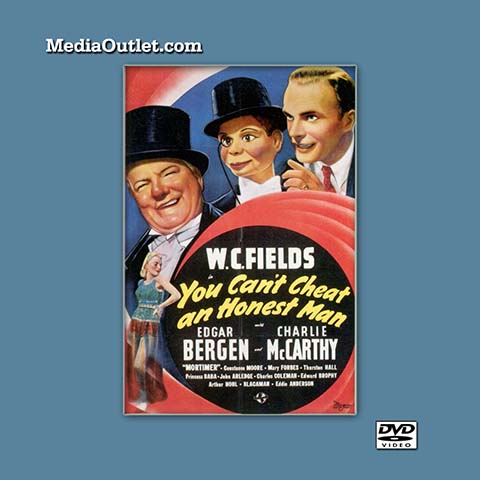
January 29: Curmudgeons Day: -- January
29, 1880: #BOTD: #HBD! W. C. Fields, American actor, comedian,
juggler and screenwriter (d. December 25, 1946) is #born William
Claude Dukenfield in Darby, Pennsylvania. Curmudgeons Day, which
clebrates of all the cranky and fussy people in our lives is
celebrated annually on W. C. Fields' birthday in his honor. His
comic persona was a misanthropic and hard-drinking egotist, who
remained a sympathetic character despite his snarling contempt for
dogs and children. His career in show business began in
vaudeville, where he attained international success as a silent
juggler. He gradually incorporated comedy into his act, and was a
featured comedian in the Ziegfeld Follies for several years. He
became a star in the Broadway musical comedy Poppy (1923), in
which he played a colorful small-time con man. His subsequent
stage and film roles were often similar scoundrels, or else
henpecked everyman characters. Among his recognizable trademarks
were his raspy drawl and grandiloquent vocabulary. The
characterization he portrayed in films and on radio was so strong
it was generally identified with Fields himself. On Sale @ 15% Off
Discount Till Midnight PT!
https://store.earthstation1.com/you-can39t-cheat-an-honest-man-dvd-1939-wc-391939.html
Today's
EarthStation1.com 15% Off Commemorative Memorial Title: Legacy
With Michael Wood World History TV Series DVD, MP4, USB Stick
Today, January 29, 2026
January 29, 1258: The Mongols: The Mongol
Empire: Mongol Invasions And Conquests: The Siege Of Baghdad (The
Siege Of Baghdad 1258): -- The Abbasid Caliphate and the Islamic
Golden Age sees its last act when The Siege Of Baghdad begins,
lasting from January 29 until February 10 when Baghdad falls to
the Mongols. The Siege Of Baghdad 1258 entailed the investment,
capture, and sack of Baghdad, the capital of the Abbasid
Caliphate, by Ilkhanate Mongol forces and allied troops. The
Abbasid Caliphate was the third of the Islamic caliphates to
succeed the Islamic prophet Muhammad. The Ilkhanate, also spelled
Il-khanate, was a khanate, a political entity ruled by a khan or
khagan typical for people from the Eurasian Steppe, established
from the southwestern sector of the Mongol Empire, ruled by the
Mongol House of Hulagu. The Islamic Golden Age was a period of
cultural, economic and scientific flourishing in the history of
Islam, traditionally dated from the 8th century. This period is
traditionally understood to have begun during the reign of the
Abbasid caliph Harun al-Rashid (786 to 809) with the inauguration
of the House of Wisdom in Baghdad, where scholars from various
parts of the world with different cultural backgrounds were
mandated to gather and translate all of the world's classical
knowledge into Arabic and Persian. This period is traditionally
said to have ended with the collapse of the Abbasid caliphate due
to Mongol invasions and the Siege Of Baghdad in 1258. The Mongols
forces were under the command of Hulagu Khan (or Hulegu Khan),
brother of the khagan Mongke Khan, who had intended to further
extend his rule into Mesopotamia but not to directly overthrow the
Caliphate. Mongke, however, had instructed Hulagu to attack
Baghdad if the Caliph Al-Musta'sim refused Mongol demands for his
continued submission to the khagan and the payment of tribute in
the form of military support for Mongol forces in Persia. Hulagu
began his campaign in Persia with several offensives against
Nizari groups, including the Assassins, who lost their stronghold
of Alamut. He then marched on Baghdad, demanding that Al-Musta'sim
accede to the terms imposed by Mongke on the Abbasids. Although
the Abbasids had failed to prepare for the invasion, the Caliph
believed that Baghdad could not fall to invading forces and
refused to surrender. Hulagu subsequently besieged the city, which
surrendered after 12 days. During the next week, the Mongols
sacked Baghdad, committing numerous atrocities and destroying the
Abbasids' vast libraries, including the House of Wisdom. The
Mongols executed Al-Musta'sim and massacred many residents of the
city, which was left greatly depopulated. The siege is considered
to mark the end of the Islamic Golden Age, during which the
caliphs had extended their rule from the Iberian Peninsula to
Sindh, and which was also marked by many cultural achievements in
diverse fields. On Sale @ 15% Off Discount Till Midnight PT!
https://store.earthstation1.com/legacy-with-michael-wood-world-history-tv-series-dvd-mp4-us4.html
Today's
EarthStation1.com 15% Off Commemorative Memorial Title: Monarchy
In The UK: British Royal History MP4 Video Download DVD Set
Today, January 29, 2026
January 29, 1820: The United Kingdom: The
History Of The United Kingdom: Governments Of The United Kingdom:
The Monarchy Of The United Kingdom (The British Monarchy): Royal
Accessions: Successions To The British Throne: Succession To The
Irish Throne: Successions To The Hanoverian Throne: King George
IV: -- Prince Regent George Hanover succeedes his father George
III as George IV, King Of The United Kingdom Of Great Britain And
Ireland and King Of Hanover, and reigned in those capacities until
his death. Prior to his accession to these thrones, he had been
Prince Regent for his father since February 5, 1811 during his
father's final mental illness. George IV (August 12, 1762 - June
26, 1830) was born George Augustus Frederick at St James's Palace,
London, England, the first child of King George III and Queen
Charlotte. He led an extravagant lifestyle that contributed to the
fashions of the Regency era; those of style of dress were due to
his association with the dandy Beau Brummell, and those of
architecture were do to his association the architect John Nash,
the latter of whom created the Regency Style of Architecture. He
was also in other fields a patron of new forms of leisure, style
and taste. He commissioned John Nash to build the Royal Pavilion
in Brighton and remodel Buckingham Palace, and commissioned Jeffry
Wyatville to rebuild Windsor Castle. George's charm and culture
earned him the title "the first gentleman of England",
but his dissolute way of life and poor relationships with his
parents and his wife, Caroline of Brunswick, earned him the
contempt of the people and dimmed the prestige of the monarchy. He
excluded Caroline from his coronation and asked the government to
introduce the unpopular Pains And Penalties Bill in an
unsuccessful attempt to divorce her. George's rule was tarnished
by scandal and financial extravagance. His ministers found his
behaviour selfish, unreliable and irresponsible, and he was
strongly influenced by favourites. During most of George's regency
and reign, Lord Liverpool controlled the government as prime
minister of the United Kingdom. Liverpool's government presided
over Britain's ultimate victory over Napoleon and negotiated a
peace settlement with the French. After Liverpool's retirement,
George was forced to accept Catholic emancipation despite opposing
it. His only legitimate child, Princess Charlotte, predeceased him
in 1817, as did his childless younger brother Prince Frederick in
1827, so he was succeeded by another younger brother, William IV.
George died at 3:15 am of upper gastrointestinal bleeding
resulting from the rupture of a blood vessel in his stomach. A
large tumour "the size of an orange" was found attached
to his bladder; his heart was enlarged, had heavily calcified
valves and was surrounded by a large fat deposit. He was buried in
St George's Chapel, Windsor Castle, on July 15, 1830. On Sale @
15% Off Discount Till Midnight PT!
https://store.earthstation1.com/monarchy-in-the-uk-british-royal-history-mp4-video-download-dvd-set.html
Today's
EarthStation1.com 15% Off Commemorative Memorial Title: Heroes
Medal Of Honor Victoria Cross Legion Of Honour DVD MP4 USB Drive
Today, January 29, 2026
January 29, 1856: Awards And Decorations:
Awards And Decorations Of The British Armed Forces: Highest
Military Awards For Gallantry: Highest Military Awards For
Gallantry Of The British Armed Forces: The Victoria Cross (VC): --
Queen Victoria issues a Warrant under the Royal sign-manual that
establishes the Victoria Cross (VC), the highest and most
prestigious award of the British honours system, to recognise acts
of valour by British military personnel during the Crimean War. A
warrant is generally an order that serves as a specific type of
authorization, that is, a writ issued by a competent officer,
usually a judge or magistrate, that permits an otherwise illegal
act that would violate individual rights and affords the person
executing the writ protection from damages if the act is
performed. In the United Kingdom, senior public appointments are
made by warrant under the royal sign-manual, the personal
signature of the monarch, on the recommendation of the government.
The royal sign-manual is the signature of the sovereign, by the
affixing of which the monarch expresses his or her pleasure either
by order, commission, or warrant. A sign-manual warrant may be
either an executive act (for example, an appointment to an
office), or an authority for affixing the Great Seal of the
pertinent realm. The sign-manual is also used to give power to
make and ratify treaties. Sign manual, with or without hyphen, is
an old term for a handwritten signature in general. It is also
referred to as sign manual and signet. The Crimean War was a
military conflict fought from October 1853 to February 1856 in
which Russia lost to an alliance of France, the Ottoman Empire,
the United Kingdom and Piedmont-Sardinia. The immediate cause of
the war involved the rights of Christian minorities in Palestine,
which was part of the Ottoman Empire (the French promoted the
rights of Roman Catholics, and Russia promoted those of the
Eastern Orthodox Church). The Victoria Cross is awarded for valour
"in the presence of the enemy" to members of the British
Armed Forces. It may be awarded posthumously. It was previously
awarded by countries of the Commonwealth of Nations, most of which
have established their own honours systems and no longer recommend
British honours. It may be awarded to a person of any military
rank in any service and to civilians under military command. No
civilian has received the award since 1879. Since the first awards
were presented by Queen Victoria in 1857, two-thirds of all awards
have been personally presented by the British monarch. These
investitures are usually held at Buckingham Palace. Since Queen
Victoria introduced the VC , the medal has been awarded 1,358
times to 1,355 individual recipients. Only 15 medals, of which 11
were to members of the British Army and four were to members of
the Australian Army, have been awarded since the Second World War.
The traditional explanation of the source of the metal from which
the medals are struck is that it derives from Russian cannon
captured at the siege of Sevastopol. However, research has
indicated another origin for the material. Historian John
Glanfield has established that the metal for most of the medals
made since December 1914 came from two Chinese cannon, and that
there is no evidence of Russian origin. Owing to its rarity, the
VC is highly prized and the medal has fetched over _400,000 at
auctions. A number of public and private collections are devoted
to the Victoria Cross. The private collection of Lord Ashcroft,
amassed since 1986, contains over one-tenth of all VCs awarded.
Following a 2008 donation to the Imperial War Museum, the Ashcroft
collection went on public display alongside the museum's Victoria
and George Cross collection in November 2010. Beginning with the
Centennial of Confederation in 1967, Canada, followed in 1975 by
Australia and New Zealand, developed their own national honours
systems, separate from and independent of the British or Imperial
honours system. As each country's system evolved, operational
gallantry awards were developed with the premier award of each
system-the Victoria Cross for Australia, the Canadian Victoria
Cross and the Victoria Cross for New Zealand-being created and
named in honour of the Victoria Cross. These are unique awards of
each honours system, recommended, assessed, gazetted, and
presented by each country. On Sale @ 15% Off Discount Till
Midnight PT!
https://store.earthstation1.com/heroes-dvd-set-all-26-tv-shows-7-di267.html
Today's
EarthStation1.com 15% Off Commemorative Memorial Title: NBC
University Theater Of The Air Literature Radio Series MP3 DVD USB
Today, January 29, 2026
January 29, 1845: First Publications: --
"The Raven" is published in The Evening Mirror in New
York, the first publication with the name of the author, Edgar
Allan Poe. Its publication made Poe popular in his lifetime,
although it did not bring him much financial success. The poem was
soon reprinted, parodied, and illustrated. Critical opinion is
divided as to the poem's literary status, but it nevertheless
remains one of the most famous poems ever written. "The
Raven" is a narrative poem often noted for its musicality,
stylized language, and supernatural atmosphere. It tells of a
talking raven's mysterious visit to a distraught lover, tracing
the man's slow fall into madness. The lover, often identified as a
student, is lamenting the loss of his love, Lenore. Sitting on a
bust of Pallas, the raven seems to further distress the
protagonist with its constant repetition of the word "Nevermore".
The poem makes use of folk, mythological, religious, and classical
references. Poe claimed to have written the poem logically and
methodically, with the intention to create a poem that would
appeal to both critical and popular tastes, as he explained in his
1846 follow-up essay, "The Philosophy of Composition".
The poem was inspired in part by a talking raven in the novel
Barnaby Rudge: A Tale of the Riots of Eighty by Charles Dickens.
Poe borrows the complex rhythm and meter of Elizabeth Barrett's
poem "Lady Geraldine's Courtship", and makes use of
internal rhyme as well as alliteration throughout. On Sale @ 15%
Off Discount Till Midnight PT!
https://store.earthstation1.com/nbc-university-theater-of-the-air-otr-mp3-dv3.html
Today's
EarthStation1.com 15% Off Commemorative Memorial Title: Radio
Broadcasting History Films DVD, Video Download, USB Flash Drive
Today, January 29, 2026
January 29, 1874: #BOTD: #HBD! John D.
Rockefeller Jr., American businessman, financier and
philanthropist (d. May 11, 1960) is #born John Davison Rockefeller
Jr. in Cleveland, Ohio, the fifth and last child, and only son, of
Standard Oil co-founder John Davison Rockefeller Sr. and
schoolteacher Laura Celestia "Cettie" Spelman. John D.
Rockefeller was the only son of Standard Oil co-founder John D.
Rockefeller. He was involved in the development of the vast office
complex in Midtown Manhattan known as Rockefeller Center, making
him one of the largest real estate holders in the city. Towards
the end of his life, he was famous for his philanthropy, donating
over 500M USD to a wide variety of different causes, including
educational establishments and museums. Among his projects was the
reconstruction of Colonial Williamsburg in Virginia. He was widely
blamed for having orchestrated the Ludlow Massacre and other
offenses during the Colorado Coalfield War. Rockefeller was the
father of six children: Abby, John III, Nelson, Laurance,
Winthrop, and David. John D. Rockefeller Jr. died of pneumonia at
the age of 86 in Tucson, Arizona. He is interred in the family
cemetery in Tarrytown, New York. On Sale @ 15% Off Discount Till
Midnight PT!
https://store.earthstation1.com/radio-broadcasting-history-films-2-dvd-se2.html
Today's
EarthStation1.com 15% Off Commemorative Memorial Title: The Birth
Of Europe: Ice Age To 20th Century DVD, Video Download, USB
Today, January 29, 2026
January 29, 1886: The History Of The
Automotive Industry: -- Karl Benz patents his "Benz Patent
Motorwagen", the first purpose-built gasoline-driven
automobile, as DRP-37435: "automobile fueled by gas". It
was the first automobile entirely designed as such to generate its
own power, not simply a motorized stage coach or horse carriage
which were vehicles designed to rely on horse power, which is why
Karl Benz was granted his patent and is regarded as the inventor
of the automobile. This is also considered to be the first
"production" vehicle as Benz made several other
identical copies. Benz began to advertise and sell his "Benz
Patent Motorwagen" in the late summer of 1888, making it the
first commercially available automobile in history. In 1870
Siegfried Marcus built the first gasoline powered combustion
engine, which he placed on a pushcart, building four progressively
more sophisticated combustion-engine cars over a 10-to-15-year
span that influenced later cars. Marcus created the two-cycle
combustion engine. The car's second incarnation in 1880 introduced
a four-cycle, gasoline-powered engine, an ingenious carburetor
design and magneto ignition. He created an additional two models
further refining his design with steering, a clutch and a brake.
Nevertheless, these automobiles were the cobbling-together of the
gasoline engine and extant wheeled vehicles. In 1871, at the age
of twenty-seven, Karl Benz joined August Ritter in launching the
Iron Foundry and Mechanical Workshop in Mannheim, later renamed
Factory for Machines for Sheet-metal Working. The enterprise's
first year went very badly. Ritter turned out to be unreliable,
and the business's tools were impounded. The difficulty was
overcome when Benz's fiancee, Bertha Ringer, bought out Ritter's
share in the company using her dowry. On 20 July 1872, Karl Benz
and Bertha Ringer married. They had five children: Eugen (1873),
Richard (1874), Clara (1877), Thilde (1882), and Ellen (1890).
Despite the business misfortunes, Karl Benz led in the development
of new engines in the early factory he and his wife owned. To get
more revenues, in 1878 he began to work on new patents. First, he
concentrated all his efforts on creating a reliable petrol
two-stroke engine. Benz finished his two-stroke engine on 31
December 1879, New Year's Eve, and was granted a patent for it in
28 June 1880. Karl Benz showed his real genius, however, through
his successive inventions registered while designing what would
become the production standard for his two-stroke engine. Benz
soon patented the speed regulation system, the ignition using
sparks with battery, the spark plug, the carburetor, the clutch,
the gear shift, and the water radiator. Benz's lifelong hobby of
bicycling brought him to a bicycle repair shop in Mannheim owned
by Max Rose and Friedrich Wilhelm Esslinger. In 1883, the three
founded a new company producing industrial machines: Benz &
Companie Rheinische Gasmotoren-Fabrik, usually referred to as Benz
& Cie. Quickly growing to twenty-five employees, it soon began
to produce static gas engines as well. The success of the company
gave Benz the opportunity to indulge in his old passion of
designing a horseless carriage. Based on his experience with, and
fondness for, bicycles, he used similar technology when he created
an automobile. It featured wire wheels (unlike carriages' wooden
ones) with a four-stroke engine of his own design between the rear
wheels, with a very advanced coil ignition and evaporative cooling
rather than a radiator. Power was transmitted by means of two
roller chains to the rear axle. Karl Benz finished his creation in
1885. The 1885 version was difficult to control, leading to a
collision with a wall during a public demonstration. The first
successful tests on public roads were carried out in the early
summer of 1886. The next year Benz created the Motorwagen Model 2,
which had several modifications, and in 1889, the definitive Model
3 with wooden wheels was introduced, showing at the Paris Expo the
same year. The second customer of the Motorwagen was a Parisian
bicycle manufacturer Emile Roger, who had already been building
Benz engines under license from Karl Benz for several years. Roger
added the Benz automobiles (many built in France) to the line he
carried in Paris and initially most were sold there. The early
1888 version of the Motorwagen had only two gears and could not
climb hills unaided. This limitation was rectified after Bertha
Benz suggested the addition of a third gear after she famously
became the first person to drive an automobile over a long
distance, rigorously field testing the patent Motorwagen,
inventing brake pads and solving several practical issues during
the 65 miles (105 km) trip. In doing so, she brought the Benz
Patent-Motorwagen worldwide attention and got the company its
first sales. On Sale @ 15% Off Discount Till Midnight PT!
https://store.earthstation1.com/the-birth-of-europe-european-history-from-the-ice-age-to-20th-centu20.html
Today's
EarthStation1.com 15% Off Commemorative Memorial Title: Forty
Years Of Fine Tuning (1984) WNEW TV Channel 5 DVD, Download, USB
Today, January 29, 2026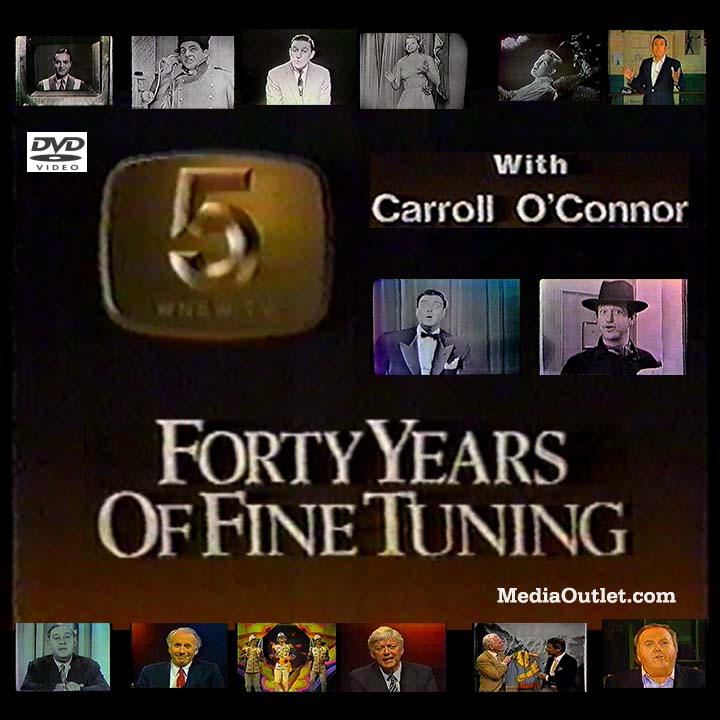
January 29, 1901: #BOTD: #HBD! Allen B.
DuMont, American electronics engineer, scientist, broadcaster and
inventor best known for improvements to the cathode ray tube in
1931 for use in television receivers, founder of the DuMont
Television Network (d. November 14, 1965) is #born Allen Balcom
DuMont, also spelled Du Mont, in Brooklyn, New York City. At the
age of 10, he was stricken with polio and was quarantined at his
family's Eastern Parkway apartment for nearly a year. During his
quarantine, his father brought home books and magazines for the
young DuMont to read while bedridden. At this time, DuMont
developed an interest in science, specifically wireless radio
communication, and taught himself Morse code. In June 1938, he
went on to manufacture and sell the first commercially practical
television set to the public, his Model 180 television receiver,
the first all-electronic television set, a mere few months prior
to RCA's first set in April 1939. In 1946, DuMont founded the
first television network to be licensed, the DuMont Television
Network, initially by linking station WABD (named for DuMont; it
later became WNEW and is now WNYW) in New York City to station
W3XWT, which later became WTTG, in Washington, D.C. (WTTG was
named for Dr. Thomas T. Goldsmith, DuMont's Vice President of
Research, and his best friend.) DuMont's successes in television
picture tubes, TV sets and components and his involvement in
commercial TV broadcasting made him the first millionaire in the
business. Since DuMont was a leader in cathode ray tube or CRT
design and manufacturing, it was a natural step to use the CRT as
a visual measuring instrument now known as an oscilloscope.
Although not the inventor of the oscilloscope, DuMont designed and
mass-produced practical oscilloscopes (he called them
oscillographs) for all types of laboratory, automotive/equipment
servicing and manufacturing applications. By the 1940s DuMont was
the leader in the oscilloscope equipment market. In 1932, DuMont
proposed a "ship finder" device to the United States
Army Signal Corps at Fort Monmouth, New Jersey, that used radio
wave distortions to locate objects on a cathode ray tube screen, a
type of radar. The military asked him, however, not to take out a
patent for developing what they wanted to maintain as a secret,
and so he is not often mentioned among those responsible for
radar. In 1932, DuMont invented the magic eye tube also known as
the Electron Ray Tube, used as a tuning accessory in radios and as
a level meter in mono and stereo home reel-to-reel tape recorders.
In the 1930s the manufacture of mechanical panel meters were
labor-intensive and expensive. Magic eye tubes provided radio
designers with a less expensive and more profitable way to add a
feature usually found in higher price equipment. The general
public reception was a success as customers like the green glow
and the seemingly magical way it worked. The DuMont Television
Network was not an unqualified success, being faced with the major
problem of how to make a profit without the benefit of an already
established radio network as a base. After ten years, DuMont
shuttered the network and sold what remained of his television
operations to John Kluge in 1956, which Kluge renamed Metromedia.
DuMont's partner, Thomas T. Goldsmith (for whom the Washington,
D.C. station WTTG was named), remained on Metromedia's board of
directors from this time all the way until Kluge sold the stations
to the Fox Television Stations Group in 1986, when the Fox network
was formed. DuMont was the first to provide funding for
educational television broadcasting. He died in 1965 and is buried
in Mount Hebron Cemetery in Montclair, New Jersey. The television
center at Montclair State University bears his name and produces
programs for the NJTV system (formerly New Jersey Network). On
Sale @ 15% Off Discount Till Midnight PT!
https://store.earthstation1.com/forty-years-of-fine-tuning-dvd-wnew-tv-channel-5-ny5.html
Today's
EarthStation1.com 15% Off Commemorative Memorial Title: JFK
Assassination MP3 Collection CD, MP3 Download, USB Flash Drive
Today, January 29, 2026
January 29, 1969: United States
Presidential Assassination Attempts And Plots: United States
Presidential Assassinations: The Assassination Of John F. Kennedy:
The Trial Of Clay Shaw: -- New Orleans businessman and covert CIA
agent Clay Shaw is brought to trial in Orleans Parish Criminal
Court on charges of conspiring to assassinate President Kennedy,
with the help of Lee Harvey Oswald, David Ferrie, and others. On
March 1, 1967, Shaw was arrested and charged by New Orleans
District Attorney Jim Garrison with conspiring to assassinate
President Kennedy. Two years later to the day, on March 1, 1969, a
jury took less than an hour to find Shaw not guilty. It remains
the only trial to be brought for the assassination of President
Kennedy. The origins of Garrison's case can be traced to an
argument between New Orleans residents Guy Banister and Jack
Martin. On November 22, 1963, the day that President John F.
Kennedy was assassinated, Banister pistol whipped Martin after a
heated exchange. (There are different accounts as to whether the
argument was over phone bills or missing files.) Over the next few
days, Martin told authorities and reporters that Banister had
often been in the company of a man named David Ferrie who, Martin
said, might have been involved in the assassination of John F.
Kennedy. Martin told the New Orleans police that Ferrie knew
accused assassin Lee Harvey Oswald going back to when both men had
served together in the New Orleans Civil Air Patrol and that
Ferrie "was supposed to have been the getaway pilot in the
assassination." Martin also said that Ferrie had driven to
Dallas the night before the assassination, a trip which Ferrie
explained as research for a prospective business venture to
determine "the feasibility and possibility of opening an ice
skating rink in New Orleans." As Garrison continued his
investigation he became convinced that a group of right-wing
activists, which he believed included David Ferrie, Guy Banister,
and Clay Shaw (director of the International Trade Mart in New
Orleans), were involved in a conspiracy with elements of the
Central Intelligence Agency (CIA) to kill President Kennedy.
Garrison would later say that the motive for the assassination was
anger over Kennedy's foreign policy, especially Kennedy's efforts
to find a political, rather than a military, solution in Cuba and
Southeast Asia, and his efforts toward a rapprochement with the
Soviet Union. Garrison also believed that Shaw, Banister, and
Ferrie had conspired to set up Oswald as a patsy in the JFK
assassination. News of Garrison's investigation was reported in
the New Orleans States-Item on February 17, 1967. On February 22,
1967, less than a week after the newspaper broke the story of
Garrison's investigation, David Ferrie, then his chief suspect,
was found dead in his apartment from a brain aneurysm. Garrison
suspected that Ferrie had been murdered despite the coroner's
report that his death was due to natural causes. According to
Garrison, the day news of the investigation broke, Ferrie had
called his aide Lou Ivon and warned that "I'm a dead man".
Garrison believed that Clay Shaw was the mysterious "Clay
Bertrand" mentioned in the Warren Commission investigation.
In the Warren Commission Report, New Orleans attorney Dean
Andrews, claimed that he was contacted the day after the
assassination by a "Clay Bertrand" who requested that he
go to Dallas to represent Oswald. At the trial's conclusion -
after the prosecution and the defense had presented their cases -
the jury took 54 minutes on March 1, 1969, to find Clay Shaw not
guilty. Attorney and author Mark Lane said that he interviewed
several jurors after the trial. Although these interviews have
never been published, Lane said that some of the jurors believed
that Garrison had in fact proven to them that there really was a
conspiracy to kill President Kennedy, but that Garrison had not
adequately linked the conspiracy to Shaw or provided a motive.
Author and playwright James Kirkwood, who was a personal friend of
Clay Shaw, said that he spoke to several jury members who denied
ever speaking to Lane. Kirkwood also cast doubt on Lane's claim
that the jury believed there was a conspiracy. In his book
American Grotesque, Kirkwood said that jury foreman Sidney Hebert
told him: "I didn't think too much of the Warren Report
either until the trial. Now I think a lot more of it than I did
before." On May 8, 1967, the New Orleans States-Item reported
that Garrison charged that the CIA and FBI cooperated to conceal
the facts of the assassination, and that he planned to seek a
Senate inquiry looking into the CIA's role in the Warren
Commission's investigation. Garrison later wrote a book about his
investigation of the JFK assassination and the subsequent trial
called On the Trail of the Assassins. This book served as one of
the main sources for Oliver Stone's movie JFK. In the movie, this
trial serves as the back story for Stone's account of the
assassination of John F. Kennedy. On Sale @ 15% Off Discount Till
Midnight PT!
https://store.earthstation1.com/jfk-assassination-mp3-set-cd-download-usb-flash-driv3.html
Today's
EarthStation1.com #OnThisDay Commemorative Memorial Title: Sacred
Serpents: Snake Worship Documentaries DVD, MP4, USB Drive
Today, January 29, 2026 January 29, 2025: Lunar New Year (Chinese
New Year, Korean New Year, Tet [Vietnamese New Year], etc.): --
Celebrates the beginning of The Year Of The Snake in the Chinese
zodiac, a festival that celebrates the beginning of a new year on
the traditional calendars on Chinese and other asian cultures. The
festival is usually referred to as the Spring Festival in mainland
China, and is one of several Lunar New Years in Asia. Observances
traditionally take place from the evening preceding the first day
of the year to the Lantern Festival, held on the 15th day of the
year. The first day of Chinese New Year begins on the new moon
that appears between January 21 and February 20. Chinese New Year
is a major holiday in China, and has strongly influenced Lunar new
year celebrations of China's neighbouring cultures, including the
new years of Korea (Seollal), Vietnam (Tet), and Tibet (Losa). It
is also celebrated worldwide in regions and countries with
significant Overseas Chinese or Sinophone populations, including
Singapore, Indonesia, Malaysia, Myanmar, Thailand, Cambodia, the
Philippines, and Mauritius, as well as many in North America and
Europe. Chinese New Year is associated with several myths and
customs. The festival was traditionally a time to honour deities
as well as ancestors. Within China, regional customs and
traditions concerning the celebration of the New Year vary widely,
and the evening preceding Chinese New Year's Day is frequently
regarded as an occasion for Chinese families to gather for the
annual reunion dinner. It is also traditional for every family to
thoroughly clean their house, in order to sweep away any
ill-fortune and to make way for incoming good luck. Another custom
is the decoration of windows and doors with red paper-cuts and
couplets. Popular themes among these paper-cuts and couplets
include that of good fortune or happiness, wealth, and longevity.
Other activities include lighting firecrackers and giving money in
red paper envelopes. For the northern regions of China, dumplings
are featured prominently in meals celebrating the festival. It
often serves as the first meal of the year either at midnight or
as breakfast of the first day.
https://store.earthstation1.com/sacred-serpents-snake-worship-documentaries--dvd-mp4-us4.html
January 29, 2025: Lunar New Year (Chinese
New Year, Korean New Year, Tet [Vietnamese New Year], etc.): --
Celebrates the beginning of The Year Of The Snake in the Chinese
zodiac, a festival that celebrates the beginning of a new year on
the traditional calendars on Chinese and other asian cultures. The
festival is usually referred to as the Spring Festival in mainland
China, and is one of several Lunar New Years in Asia. Observances
traditionally take place from the evening preceding the first day
of the year to the Lantern Festival, held on the 15th day of the
year. The first day of Chinese New Year begins on the new moon
that appears between January 21 and February 20. Chinese New Year
is a major holiday in China, and has strongly influenced Lunar new
year celebrations of China's neighbouring cultures, including the
new years of Korea (Seollal), Vietnam (Tet), and Tibet (Losa). It
is also celebrated worldwide in regions and countries with
significant Overseas Chinese or Sinophone populations, including
Singapore, Indonesia, Malaysia, Myanmar, Thailand, Cambodia, the
Philippines, and Mauritius, as well as many in North America and
Europe. Chinese New Year is associated with several myths and
customs. The festival was traditionally a time to honour deities
as well as ancestors. Within China, regional customs and
traditions concerning the celebration of the New Year vary widely,
and the evening preceding Chinese New Year's Day is frequently
regarded as an occasion for Chinese families to gather for the
annual reunion dinner. It is also traditional for every family to
thoroughly clean their house, in order to sweep away any
ill-fortune and to make way for incoming good luck. Another custom
is the decoration of windows and doors with red paper-cuts and
couplets. Popular themes among these paper-cuts and couplets
include that of good fortune or happiness, wealth, and longevity.
Other activities include lighting firecrackers and giving money in
red paper envelopes. For the northern regions of China, dumplings
are featured prominently in meals celebrating the festival. It
often serves as the first meal of the year either at midnight or
as breakfast of the first day.
https://store.earthstation1.com/sacred-serpents-snake-worship-documentaries--dvd-mp4-us4.html
Today's
EarthStation1.com #OnThisDay Commemorative Memorial Title: Super
Sense Animal Perception/Plant Adaptation TV Series DVD, MP4, USB
Today, January 29, 2026January 29: Seeing-Eye Guide Dog
Anniversary: -- An annual appreciation for all of the dogs who act
as their owners' eyes and ears. The devotion and taught abilities
of these particular canines keep them safe and enable them to
operate as fully functional persons. The day is meant to recognize
the school that educates them. Seeing-eye dogs go through
extensive training to be able to safely traverse the environment
and all of its hazards for their person. That is why they are so
worthy of this recognition. Since World War II, guide dogs have
been utilized worldwide. With the goal of counseling war-affected
troops, Morris Frank is credited with being the first recipient of
a sighted dog in the U.S., a dog called Buddy. Dorothy Harrison
Eustis, an American dog breeder residing in Switzerland, wrote
about a guide dog display in Potsdam, Germany, in 1927, and the
essay was featured in "The Saturday Evening Post." This
article was about dogs being taught to be ears and eyes for German
World War I veterans. Frank sent a letter to Eustis as soon as he
read the story, imploring her to train a dog for him. Eustis
agreed to Frank's urgent plea and welcomed him to Switzerland.
After a time of training with two dogs, Eustis and Frank picked
the best dog for the job, which Frank called Buddy. In 1928, Frank
arrived in New York City, U.S., where he and Buddy were met by a
swarm of media. And Buddy was fantastic at navigating Frank
through the congested streets of traffic and people. When Frank
arrived home safely, he wrote a success message to Eustis to
express his happiness. The See-Eye was started on January 29,
1929, with Frank and Eustis as co-founders. To this day, the
See-Eye is the world's most sustainable guide dog training school.
The Seeing-Eye Guide Dog Anniversary celebrates the See-Eye's
inception date as the year's anniversary. Many people's lives are
becoming more stable due to guide dogs, and many governmental
policies for people who need guide dogs and for guide dogs are
improving due to their eyesight.
https://store.earthstation1.com/super-sense--animal-perception-tv-series-dvd-mp4-download-usb-driv4.html
Today's
EarthStation1.com #OnThisDay Commemorative Memorial Title: The
Shadow Complete Old Time Radio Series MP3 Set DVD, MP4, USB Drive
Today, January 29, 2026January 29: National Carnation Day: --
The flowers are amazingly significant for almost any season or
occasion. National Carnation Day was established in honor of
William McKinley, the 25th U.S. President, who was assassinated in
1901 and always wore a red carnation on his lapel. The carnation
was said to be his favorite flower, and he always wore one for
good luck. National Carnation Day, also known as Red Carnation
Day, was established in memory of President William McKinley. He
was born many years ago on January 29, and was well known for his
love of carnations, as he often wore one on his lapel. McKinley's
famed carnations stayed on for a while, with the flower appearing
multiple times all throughout his political career. It all started
in 1876 when he was running for Congress in Ohio on the Republican
ticket. His competitor, Levi Lamborn, was a horticulturalist who
had cultivated a strain of bright scarlet carnations he named
'Lamborn Red.' So before debates between the candidates, Lamborn
gave McKinley one of his carnations. And after McKinley won the
election, he began viewing carnations as good luck charms - and
maybe they were because they just kept working in his favor.
McKinley had carnations everywhere; his clothes and the vase in
his office were filled with them. Even during his stay in the
White House, he kept a whole basket of carnations centered in the
Cabinet Room. One political joke remarked, "Whenever someone
came to see the President and couldn't get an office, he got a
carnation." President McKinley would pick up one of the
flowers and place them in the visitor's buttonhole. So whenever a
man left the president's presence wearing a flower, everyone
figured he didn't get what he went for. According to legend, when
President McKinley was sadly hit by an assassin's bullet in
September of 1901, he took off the carnation he was wearing and
gave it to a young girl. People believe luck left him when he took
off the carnation. After his death, National Carnation Day started
in his honor. The official day began with the Carnation League of
America, the group established by Lewis G. Reynolds of Dayton,
Ohio, and was first held in 1903. It is a silent memorial day in
which its observers wear a carnation in the spirit of patriotism
and to "encourage the growth of good citizenship and advance
the greatness of the country by the proper observance of national
holidays."
https://store.earthstation1.com/the-shadow-radio-mp3-dvd-complete-old-time-broadcast3.html
Today's
EarthStation1.com #OnThisDay Commemorative Memorial Title:
Portraits Of American Presidents Nos. 1-42 TV Series MP4 Download
DVD
Today, January 29, 2026January 29: National Carnation Day: --
January 29, 1843: #BOTD: #HBD! William McKinley, 25th President of
the United States, serving from March 4, 1897 until his
assassination six months into his second term (d. September 14,
1901) is #born in Niles, Ohio, the seventh of nine children of
William McKinley Sr. and Nancy (nee Allison) McKinley. McKinley
led the nation to victory in the Spanish-American War, raised
protective tariffs to promote American industry, and maintained
the nation on the gold standard in a rejection of free silver
(effectively, expansionary monetary policy). McKinley was the last
president to have served in the American Civil War, and the only
one to have started the war as an enlisted soldier, beginning as a
private in the Union Army and ending as a brevet major. After the
war, he settled in Canton, Ohio, where he practiced law and
married Ida Saxton. In 1876, he was elected to Congress, where he
became the Republican Party's expert on the protective tariff,
which he promised would bring prosperity. His 1890 McKinley Tariff
was highly controversial; which together with a Democratic
redistricting aimed at gerrymandering him out of office, led to
his defeat in the Democratic landslide of 1890. He was elected
Governor of Ohio in 1891 and 1893, steering a moderate course
between capital and labor interests. With the aid of his close
adviser Mark Hanna, he secured the Republican nomination for
president in 1896, amid a deep economic depression. He defeated
his Democratic rival, William Jennings Bryan, after a front porch
campaign in which he advocated "sound money" (the gold
standard unless altered by international agreement) and promised
that high tariffs would restore prosperity. Rapid economic growth
marked McKinley's presidency. He promoted the 1897 Dingley Tariff
to protect manufacturers and factory workers from foreign
competition, and in 1900, he secured the passage of the Gold
Standard Act. McKinley hoped to persuade Spain to grant
independence to rebellious Cuba without conflict, but when
negotiation failed, he led the nation into the Spanish-American
War of 1898; the U.S. victory was quick and decisive. As part of
the peace settlement, Spain turned over to the United States its
main overseas colonies of Puerto Rico, Guam, and the Philippines;
Cuba was promised independence, but at that time remained under
the control of the U.S. Army. The United States annexed the
independent Republic of Hawaii in 1898 and it became a U.S.
territory. Historians regard McKinley's 1896 victory as a
realigning election, in which the political stalemate of the
post-Civil War era gave way to the Republican-dominated Fourth
Party System, which began with the Progressive Era. McKinley
defeated Bryan again in the 1900 presidential election, in a
campaign focused on imperialism, protectionism, and free silver.
His legacy was suddenly cut short when he was shot on September 6,
1901 by Leon Czolgosz, a second-generation Polish-American with
anarchist leanings; McKinley died eight days later, and was
succeeded by his Vice President Theodore Roosevelt. As an
innovator of American interventionism and pro-business sentiment,
McKinley's presidency is generally considered above average,
though his highly positive public perception was soon overshadowed
by Roosevelt.
https://store.earthstation1.com/portraits-of-american-presidents-nos-142-tv-series-mp4-download1424.html
Today's
EarthStation1.com #OnThisDay Commemorative Memorial Title: The
World: A Television History Documentary Series DVD, Download, USB
Today, January 29, 2026January 29, 1850: The History Of The
United States: United States Expansionism: Origins Of The American
Civil War: The Compromise Of 1850: -- Whig Senator Henry Clay of
Kentucky introduces the Compromise Of 1850 he drafted to the
United States Congress, a bill which ultimatelyl became a package
of five separate bills passed by congress the following September
1850, defusing a four-year political confrontation between slave
and free states on the status of territories acquired during the
Mexican-American War (1846-1848) and reduced sectional conflict.
On March 7, 1850, Senator Daniel Webster gaves his historic
"Seventh Of March" speech endorsing the Compromise Of
1850 in order to prevent a possible civil war, a speech designed
to influence public opinion in favor of the compromise to preserve
the Union, which he later acknowledged was "probably the most
important effort of my life", a spech considered a classic
example of American political oratory, but which also deeply
offended many in the North generally and in his own state of
Massachusetts; as result of the speech, Webster resigned as
Senator, but espite this, Webster' support for the Compromise Of
1850, proved crucial to its passage. The Compromise Of 1850 was
brokered by Clay and Democratic Senator Stephen Douglas of
Illinois. Controversy arose over the Fugitive Slave provision. The
Compromise was greeted with relief, but each side disapproved of
some of its specific provisions: 1) Texas surrendered claim to New
Mexico as well as its claims north of 36 deg. 30 min.. It retained
the Texas Panhandle, and the federal government took over the
state's public debt; 2) California was admitted as a free state,
with its current boundaries; 3) The South prevented adoption of
the Wilmot Proviso that would have outlawed slavery in the new
territories, and the new Utah Territory and New Mexico Territory
were allowed, under popular sovereignty, to decide whether to
allow slavery in their borders. In practice, these lands were
generally unsuited to plantation agriculture, and their settlers
were uninterested in slavery; 4) The slave trade, but not slavery
altogether, was banned in the District of Columbia; and 5) A more
stringent Fugitive Slave Law was enacted. The Compromise became
possible after the sudden death of President Zachary Taylor, who,
although a slave owner, wanted to exclude slavery from the
Southwest. Whig leader Henry Clay designed a compromise, which
failed to pass in early 1850 because of opposition by both
pro-slavery southern Democrats, led by John C. Calhoun, and
anti-slavery northern Whigs. Upon Clay's instruction, Douglas then
divided Clay's bill into several smaller pieces and narrowly won
their passage, over the opposition of radicals on both sides.
https://store.earthstation1.com/the-world-a-television-history-4-dual-layer-dvds-all-26-sh426.html
Today's
EarthStation1.com #OnThisDay Commemorative Memorial Title:
American Revolutionary War Documentaries DVD, Download, USB Drive
Today, January 29, 2026January 29, 1820: #DOTD: King George III
of the United Kingdom (George William Frederick), King of Great
Britain and King Of Ireland from October 25, 1760 until the union
of the two countries on January 1, 1801, after which he was King
Of The United Kingdom of Great Britain and Ireland until his death
(b. June 4, 1738) #dies aged 81 of pneumonia at Windsor Castle at
8:38 pm, six days after the death of his fourth son Prince Edward,
Duke of Kent and Strathearn. His favourite son, Prince Frederick,
Duke of York And Albany, was with him. George III lay in state for
two days, and his funeral took place on February 16 in St George's
Chapel, Windsor Castle, where he was interred in The Royal Vault.
On George III's death, the Prince Regent George Hanover succeeded
his father as George IV. Historical analysis of George III's life
has gone through a kaleidoscope of changing views that have
depended heavily on the prejudices of his biographers and the
sources available to them. Until it was reassessed in the second
half of the 20th century, his reputation in the United States was
one of a tyrant; and in Britain he became "the scapegoat for
the failure of imperialism". George III was born George
William Frederick Hanover in Norfolk House, St James's Square,
London, England. He was concurrently Duke and prince-elector of
Brunswick-Luneburg ("Hanover") in the Holy Roman Empire
before becoming King of Hanover on October 12, 1814. He was the
third British monarch of the House Of Hanover, but unlike his two
predecessors, he was born in England, spoke English as his first
language, and never visited Hanover. His life and with it his
reign, which were longer than those of any of his predecessors,
were marked by a series of military conflicts involving his
kingdoms, much of the rest of Europe, and places farther afield in
Africa, the Americas and Asia. Early in his reign, Great Britain
defeated France in the Seven Years' War, becoming the dominant
European power in North America and India. However, many of
Britain's American colonies were soon lost in the American War of
Independence. Further wars against revolutionary and Napoleonic
France from 1793 concluded in the defeat of Napoleon at The Battle
Of Waterloo in 1815. In the later part of his life, George III had
recurrent, and eventually permanent, mental illness. Although it
has since been suggested that he had the blood disease porphyria,
the cause of his illness remains unknown. After a final relapse in
1810, a regency was established, and George III's eldest son,
George, Prince Of Wales, ruled as Prince Regent.
https://store.earthstation1.com/american-revolutionary-war-dvd-documentaries.html
Today's
EarthStation1.com #OnThisDay Commemorative Memorial Title: The
Gulf Crisis: The Road To War TV Series + Bonus 2 DVDs MP4 Download
Today, January 29, 2026January 29, 1991: The Aftermath Of World
War II: The Cold War: The Gulf War (The Persian Gulf War, Gulf War
I): Operation Desert Storm: -- United States and the Soviet Union
offer a ceasefire to Iraq if it withdraws all its troops from
Kuwait. The offer is not accepted. The Gulf War (August 2, 1990 -
February 28, 1991), codenamed Operation Desert Shield (August 2,
1990 - January 17, 1991) for operations leading to the buildup of
troops and defense of Saudi Arabia, and Operation Desert Storm
(January 17, 1991 - February 28, 1991) in its combat phase, was a
war waged by coalition forces from 35 nations led by the United
States against Iraq in response to Iraq's invasion and annexation
of Kuwait. The war is also known under other names, such as the
Persian Gulf War, First Gulf War, Gulf War I, Kuwait War, First
Iraq War or Iraq War, before the term "Iraq War" became
identified instead with the 2003 Iraq War.
https://store.earthstation1.com/the-gulf-crisis-the-road-to-war-tv-documentary-series-dvd-mp4-us4.html
Today's
EarthStation1.com #OnThisDay Commemorative Memorial Title: Desert
Triumph: The Gulf War TV Documentary Series DVD & MP4 Download
Today, January 29, 2026January 29, 1991: The Aftermath Of World
War II: The Cold War: The Gulf War (The Persian Gulf War, Gulf War
I): Operation Desert Storm: The Battle Of Khafji: -- Iraqi forces
invade the town of Khafji in Saudi Arabia. Iraqi forces are
quickly engaged by Saudi Arabian and Qatari troops with help from
the U.S. Marines. The Battle of Khafji was the first major ground
engagement of the Persian Gulf War. It took place in and around
the Saudi Arabian city of Khafji, from 29 January to 1 February
1991 and marked the culmination of the Coalition's air campaign
over Kuwait and Iraq, which had begun on 17 January 1991. Iraqi
leader Saddam Hussein, who had already tried and failed to draw
Coalition troops into costly ground engagements by shelling Saudi
Arabian positions and oil storage tanks and firing Scud
surface-to-surface missiles at Israel, ordered the invasion of
Saudi Arabia from southern Kuwait. The 1st and 5th Mechanized
Divisions and 3rd Armored Division were ordered to conduct a
multi-pronged invasion toward Khafji, engaging Saudi Arabian,
Kuwaiti, and U.S. forces along the coastline, with a supporting
Iraqi commando force ordered to infiltrate further south by sea
and harass the Coalition's rear. These three divisions, which had
been heavily damaged by Coalition aircraft in the preceding days,
attacked on 29 January. Most of their attacks were repulsed by
U.S. Marines as well as U.S. Army Rangers and Coalition aircraft,
but one of the Iraqi columns occupied Khafji on the night of 29-30
January. Between 30 January and 1 February, two Saudi Arabian
National Guard battalions and two Kuwaiti tank companies attempted
to retake control of the city, aided by Coalition aircraft and
U.S. artillery. By 1 February, the city had been recaptured at the
cost of 43 Coalition servicemen dead and 52 wounded. Iraqi Army
fatalities numbered between 60 and 300, while an estimated 400
were captured as prisoners of war. Although the invasion of Khafji
was initially a propaganda victory for the Ba'athist Iraqi regime,
it was swiftly recaptured by Saudi Arabian ground forces. The
battle demonstrated the ability of air power to support ground
forces. The Gulf War (August 2, 1990 - February 28, 1991),
codenamed Operation Desert Shield (August 2, 1990 - January 17,
1991) for operations leading to the buildup of troops and defense
of Saudi Arabia, and Operation Desert Storm (January 17, 1991 -
February 28, 1991) in its combat phase, was a war waged by
coalition forces from 35 nations led by the United States against
Iraq in response to Iraq's invasion and annexation of Kuwait. The
war is also known under other names, such as the Persian Gulf War,
First Gulf War, Gulf War I, Kuwait War, First Iraq War or Iraq
War, before the term "Iraq War" became identified
instead with the 2003 Iraq War.
https://store.earthstation1.com/desert-triumph-the-gulf-war-tv-documentary-series-dvd-amp-mp4-downloa4.html
Today's
EarthStation1.com #OnThisDay Commemorative Memorial Title: Robert
Frost Documentaries Set DVD, Video Download, USB Flash Drive
Today, January 29, 2026January 29, 1963: #DOTD: #RIP: Robert
Frost, American poet and playwright (b. March 26, 1874) #dies in
Boston aged 88 of complications from prostate surgery, aged 88. He
is buried at the Old Bennington Cemetery in Bennington, Vermont.
His epitaph quotes the last line from his poem, "The Lesson
For Today" (1942): "I had a lover's quarrel with the
world.". Robert Lee Frost was born Robert Lee Frost in San
Francisco, California. Frost was initially published in England
before it was published in America. Known for his realistic
depictions of rural life and his command of American colloquial
speech, Frost frequently wrote about settings from rural life in
New England in the early twentieth century, using them to examine
complex social and philosophical themes. Frost was honored
frequently during his lifetime, receiving four Pulitzer Prizes for
Poetry. He was awarded the Congressional Gold Medal in 1960 for
his poetic works. On July 22, 1961, Frost was named poet laureate
of Vermont.
https://store.earthstation1.com/robert-frost-dvd-biography-poetry-documentary.html
Today's
EarthStation1.com #OnThisDay Commemorative Memorial Title: CIA The
Secret Files The Central Intelligence Agency TV Series MP4 DVD
Today, January 29, 2026January 29, 1969: #DOTD: Allen Dulles,
American banker, lawyer, and diplomat, first civilian Director and
5th Director of Central Intelligence (DCI) and its longest-serving
director to date (b. April 7, 1893) #dies of influenza,
complicated by pneumonia, at the age of 75, in Georgetown, D.C. He
is buried in Green Mount Cemetery in Baltimore, Maryland. Allen
Dulles was born Allen Welsh Dulles in Watertown, New York. He was
five years younger than his brother, John Foster Dulles, Dwight D.
Eisenhower's secretary of state and chairman and senior partner of
Sullivan & Cromwell, and two years older than his sister,
diplomat, Eleanor Lansing Dulles. His maternal grandfather, John
W. Foster, was secretary of state under Benjamin Harrison, while
his uncle by marriage, Robert Lansing was secretary of state under
Woodrow Wilson. As head of the Central Intelligence Agency (CIA)
during the early Cold War, Allen Dulles oversaw the 1953 Iranian
coup d'etat, the 1954 Guatemalan coup d'etat, the Lockheed U-2
aircraft program, the Project MKUltra mind control program and the
Bay Of Pigs Invasion. He was fired by John F. Kennedy over the
latter fiasco and the Algiers putsch against Charles de Gaulle.
Dulles was one of the members of the Warren Commission
investigating the assassination of John F. Kennedy. Between his
stints of government service, Dulles was a corporate lawyer and
partner at Sullivan & Cromwell. His older brother, John Foster
Dulles, was the Secretary Of State during the Eisenhower
Administration and is the namesake of Dulles International
Airport. Allen Dulles died of influenza, complicated by pneumonia,
at the age of 75, in Georgetown, D.C. He is buried in Green Mount
Cemetery in Baltimore, Maryland.
https://store.earthstation1.com/cia-the-secret-files-the-central-intelligence-agency-tv-series-mp4-dv4.html
Today's
EarthStation1.com #OnThisDay Commemorative Memorial Title: The Old
Time Radio Adventure MegaSet MP3 DVD, Download, USB Drive
Today, January 29, 2026January 29, 1964: #DOTD: #RIP: Alan Ladd,
American actor and film and producer (b. September 3, 1913) #dies
in Palm Springs, California aged 50 of cerebral edema caused by an
acute accidental overdose of "alcohol and three other drugs".
His butler said that he saw Ladd on his bed at 10 a.m.; when he
returned at 3:30 p.m., Ladd was still there, dead. In January
1964, after injuring his knees, Ladd hoped to recuperate at his
house in Palm Springs. Ladd suffered from chronic insomnia and
regularly used sleeping pills and alcohol to induce sleep. While
he had not taken a lethal amount of any one drug, the combination
apparently caused a synergistic reaction that proved fatal.
Suicide was ruled out. He was buried in the Forest Lawn Memorial
Park Cemetery in Glendale, California. Ladd's funeral was held on
February 1 with Edmond O'Brien giving the eulogy. Fans were
allowed to see his coffin. He was buried with his wedding ring,
out of respect for his wife and agent Sue Carol, and a letter that
their son David had written to him. Ladd died a wealthy man, with
his holdings including a 5,000-acre ranch at Hidden Valley and a
hardware store in Palm Springs. After he died, his recently
completed film The Carpetbaggers was released and became a
financial success. Born Alan Walbridge Ladd in Hot Springs,
Arkansas, Ladd found success in film in the 1940s and early 1950s,
particularly in Westerns such as Shane (1953) and in films noir.
He was often paired with Veronica Lake in noirish films such as
This Gun for Hire (1942), The Glass Key (1942) and The Blue Dahlia
(1946). His other notable credits include Two Years Before the
Mast (1946), Whispering Smith, his first Western and color film,
(1948) and The Great Gatsby (1949). His popularity diminished in
the late 1950s, though he continued to appear in popular films,
including his first supporting role since This Gun for Hire in the
smash hit The Carpetbaggers (1963), until his accidental death due
to a lethal combination of alcohol, a barbiturate, and two
tranquilizers.
https://store.earthstation1.com/the-old-time-radio-adventure-mp3-dvd-megase3.html
Today's
EarthStation1.com #OnThisDay Commemorative Memorial Title: After
The Fox (1966) Peter Sellers Victor Mature DVD MP4 USB Drive
Today, January 29, 2026January 29, 1913: #BOTD: #HBD! Victor
Mature, American stage, film, and television actor who starred
most notably in several movies during the 1950s (d. August 4,
1999) is #born Victor John Mature in Louisville, Kentucky. His
father, Marcello Gelindo Maturi, later Marcellus George Mature,
was a cutler from Pinzolo, in the Italian part of the former
County of Tyrol (now Trentino in Italy, but at that time part of
the Austro-Hungarian Empire). His mother, Clara P. (Ackley), was
Kentucky-born and of Swiss heritage. Victor Mature was known for
his dark hair and smile. His best known film roles include One
Million B.C. (1940), My Darling Clementine (1946), Kiss of Death
(1947), Samson and Delilah (1949), and The Robe (1953). He also
appeared in many musicals opposite such stars as Rita Hayworth and
Betty Grable. Victor Mature died of leukemia at his Rancho Santa
Fe, California home at the age of 86. He is buried in the family
plot, marked by a replica of the Angel of Grief, at St. Michael's
Cemetery in his hometown of Louisville, Kentucky. For his
contribution to the motion-picture industry, Mature has a star on
the Hollywood Walk of Fame located at 6780 Hollywood Boulevard.
https://store.earthstation1.com/after-the-fox-dvd-1966-peter-sellers-victor-matur1966.html
Today's
EarthStation1.com #OnThisDay Commemorative Memorial Title: TV
Commercials: The Cable Age Classics Vol. 5 MP4 Video Download DVD
Today, January 29, 2026January 29, 1945: #BOTD: #HBD: Tom
Selleck, American actor whose breakout role was playing private
investigator Thomas Magnum in the television series Magnum, P.I.
(1980-1988), for which he received five Emmy Award nominations for
Outstanding Lead Actor in a Drama Series, winning in 1984, is born
Thomas William Selleck in Detroit, Michigan. From 2010-24, he was
NYC Police Commissioner Frank Reagan in Blue Bloods. From 2005-15,
he was troubled small-town police chief Jesse Stone in nine
television films based on the Robert B. Parker novels. In films,
Selleck has played bachelor architect Peter Mitchell in Three Men
and a Baby (1987) and its sequel Three Men and a Little Lady
(1990). He has also appeared in more than 50 other film and
television roles since Magnum, P.I., including the films Quigley
Down Under, Mr. Baseball, and Lassiter. He appeared in recurring
television roles as Monica Geller's love interest Dr. Richard
Burke in Friends, as Lance White, the likeable and naive partner
on The Rockford Files, and as casino owner A. J. Cooper on Las
Vegas. He also had a lead role in the television Western film The
Sacketts, based on two of Louis L'Amour's books. Selleck was a
spokesman for the National Rifle Association of America, an
endorser in advertisements for National Review magazine, and
co-founder of the Character Counts! organization. He also served
as an infantryman in the California Army National Guard from 1967
to 1973, attaining the rank of sergeant.
https://store.earthstation1.com/tv-commercials-the-cable-age-classics-vol-5-mp4-video-download-dvd.html
Today's
EarthStation1.com #OnThisDay Commemorative Memorial Title: TV
Music & Dance Shows #5 Ready Steady Go! DVD, Download, Flash
Drive
Today, January 29, 2026( #JCKaelin here: To my mind, this is the
greatest hero of American music. So much of what my youthful
white-boy 1960s rock 'n' roll reality of "cool" was
based either partly or entirely on him - and practically none of
my generation even know his name - so it's left to me and those
like me with their eyes, ears and hearts open enough to do
something about it!) ========= January 29, 1992: #DOTD: #RIP:
Willie Dixon, African American blues guitarist, bassist, singer,
songwriter, arranger and record producer, widely considered
history's most influential blues artist, who sang with a
distinctive voice, but is best known as one of the most prolific
songwriters of his time (b. July 1, 1915) #dies of heart failure
in Burbank, California, aged 76. He is buried in Burr Oak
Cemetery, in Alsip, Illinois. After his death, his widow, Marie
Dixon, took over the Blues Heaven Foundation and moved the
headquarters to Chess Records. Dixon was posthumously inducted
into The Rock And Roll Hall Of Fame in the category Early
Influences (pre-rock) in 1994. On April 28, 2013, both Dixon and
his grandson Alex Dixon were inducted into the Chicago Blues Hall
of Fame.In 2007, Dixon was honored with a marker on the
Mississippi Blues Trail in Vicksburg. The actor and comedian
Cedric the Entertainer portrayed Dixon in Cadillac Records, a 2008
film based on the early history of Chess Records. In 2020, Rolling
Stone ranked him as the 12th greatest bass player and mentioned
him as the history's most influential bluesmen. Willie Dixon was
born William James Dixonin Vicksburg, Mississippi. Next to Muddy
Waters, Dixon is recognized as the most influential person in
shaping the post-World War II sound of the Chicago blues. Dixon's
songs have been recorded by countless musicians in many genres as
well as by various ensembles in which he participated. A short
list of his most famous compositions includes "Hoochie
Coochie Man", "I Just Want to Make Love to You",
"Little Red Rooster", "My Babe", "Spoonful",
and "You Can't Judge a Book by the Cover". These songs
were written during the peak years of Chess Records, from 1950 to
1965, and were performed by Muddy Waters, Howlin' Wolf, Little
Walter, and Bo Diddley; they influenced a generation of musicians
worldwide. Dixon was an important link between the blues and rock
and roll, working with Chuck Berry and Bo Diddley in the late
1950s. His songs have been covered by some of the most successful
musicians of the past sixty years including Bob Dylan and Jimi
Hendrix. Jeff Beck, Cream, The Doors, Led Zeppelin, The Rolling
Stones and Steppenwolf all featured at least one of his songs on
their debut albums, a measure of his influence on rock music. He
received a Grammy Award and was inducted into the Blues Hall of
Fame, The Rock And Roll Hall Of Fame, and the Songwriters Hall of
Fame. Dixon was inducted into the Blues Hall of Fame in 1980, in
the inaugural session of the Blues Foundation's ceremony. In 1989
he received a Grammy Award for his album Hidden Charms. Dixon's
health increasingly deteriorated during the 1970s and the 1980s,
primarily as a result of long-term diabetes. Eventually one of his
legs was amputated.
https://store.earthstation1.com/classic-tv-music-amp-dance-shows-5-ready-steady-go-dv5.html
Today's
EarthStation1.com #OnThisDay Commemorative Memorial Title: WABC
Radio Airchecks MP3 Collection 1960s-1980s DVD, MP3 Download, USB
Today, January 29, 2026January 29, 2017: #DOTD: #RIP: Herb Oscar
Anderson, morning D.J. for the New York Top 40 station WABC-AM
during most of the 1960s (b. May 30, 1928) #dies of kidney failure
in Bennington, Vermont aged 88. He was born in South Beloit,
Illinois, and was raised along with his four siblings at the Odd
Fellows orphanage in nearby Lincoln, Illinois because his widowed
mother was too poor to support them. He and his mother were
eventually reunited. When Mr. Anderson arrived at WABC in 1960,
the station was in the early stages of a battle for listeners with
WMCA, WINS and WMGM. He was one of the station's "Swingin' 7"
air personalities, a group that included Scott Muni and was known
as the All Americans. But Mr. Anderson was a throwback in a
changing music scene, a fan of the big band sound, not necessarily
the rock 'n' roll he was playing on a 50,000-watt station that
reached well beyond the city limits. His son John James, an actor
who played Jeff Colby on the prime-time soap opera "Dynasty",
said "My father walked into his job at WABC wearing wingtips
and a suit and left in wingtips and a suit.". As the
station's low-key "morning mayor," Mr. Anderson had a
mandate: to appeal to adults whose buying power was critical to
advertisers, more than to the teenagers who were already tuning
in. Each morning, his booming, melodic voice crooned his lyrics to
his signature song, "Hello Again": "Hello again,
here's my best to you. Are your skies all gray? I hope they're
blue.". He recorded that song, as he did a few others, and
wrote lyrics to instrumentals by Nelson Riddle and Bert Kaempfert.
Mr. Anderson's old-fashioned approach set him apart from other
D.J.'s at the station, like the exuberant Bruce Morrow (a.k.a.
Cousin Brucie), who courted teenagers. In effect, Mr. Anderson had
said, there were two WABCs: one in the morning, and one for the
rest of the day. "We had to make money," Mr. Anderson
told MusicRadio77.com, a website devoted to the Top 40 legacy of
the station, which switched to a talk format in 1982. "No
question about it. I was for the housewife, mother and children.
It was a combination that had to be done." Allan Sniffen, who
runs MusicRadio77.com, said, "His job was to come in and
sound like a grown-up, not like Cousin Brucie.". He died of
kidney failure on Sunday January 29, 2017 in Bennington, Vt., near
Hoosick Falls, N.Y., where he had a home. He was 88.
https://store.earthstation1.com/wabc-musicradio-shows-mp3-dvd-60s80s-am-360807775.html
Today's
EarthStation1.com #OnThisDay Commemorative Memorial Title:
Offshore Pirate Radio 1960s-1980s MP3s DVD, Audio Download, USB
Drive
Today, January 29, 2026January 29, 1943: #BOTD: #HBD! Tony
Blackburn, English disc jockey, singer and television presenter,
whose career spans 60 years, is #born Anthony Kenneth Blackburn in
Guildford, Surrey, South East England. Anthony Kenneth Blackburn
OBE first achieved fame broadcasting on the pirate stations Radio
Caroline and Radio London in the 1960s, before joining the BBC,
initially broadcasting on the BBC Light Programme. His was the
first voice to be heard on newly launched Radio 1 on September 30,
1967. He also has had several stints working for the corporation.
He also worked for Capital London, Classic Gold Digital and BBC
Local Radio, and as of 2005 currently BBC Radio 2 and British
Forces Broadcasting Service. He regularly presented the British
popular music dance show Top Of The Pops (TOTPs). He has also had
a singing career. As a DJ, Blackburn is known for his championing
of Motown and soul music as well as his popular presenting style.
In 2002, Blackburn was the first "King Of The Jungle"
(winner) of the British reality TV series I'm a Celebrity...Get Me
Out of Here!
https://store.earthstation1.com/offshore-pirate-radio-2-dual-layer-mp3-dvds-uk-amp-euro23.html
Today's
EarthStation1.com #OnThisDay Commemorative Memorial Title: TV
Music & Dance Shows #1 Hullabaloo DVD, Video Download, USB
Drive
Today, January 29, 2026January 29, 2021: #DOTD: #RIP: Hilton
Valentine, English skiffle and rock and roll musician who was the
original guitarist in The Animals (b. May 21, 1943) #dies at the
age of 77 in Norwich, Connecticut; no cause of death was given.
His body was returned to England and is interred at Preston
Cemetery and Tynemouth Crematorium, North Shields, North Tyneside,
Tyne and Wear. Hilton Valentine was born Hilton Stewart Paterson
Valentine in North Shields, Northumberland, England. He was
inducted into the Rock and Roll Hall of Fame in 1994 and into
Hollywood's Rock Walk of Fame in 2001 with the other members of
The Animals. Following The Animals' breakup in 1966, Valentine
produced several solo albums including All in Your Head (1969) and
It's Folk 'N' Skiffle, Mate! (2004). He also toured New England
and participated in several The Animals reunions.
https://store.earthstation1.com/classic-tv-music-amp-dance-shows-1-hullabaloo-dv1.html
Today's
EarthStation1.com #OnThisDay Commemorative Memorial Title: Rock &
Roll An Unruly History 10 Part TV Series MP4 Video Download DVD
Today, January 29, 2026January 29, 1949: #BOTD: #HBD! Tommy
Ramone, Hungarian-American drummer and producer, drummer for the
influential punk rock band the Ramones from its debut in 1974 to
1978, later serving as its producer, and was the longest-surviving
original member of the Ramones (d. July 11, 2014) is #born Tamas
Erdelyi in Budapest, Hungary. His Jewish parents were professional
photographers, who survived the Holocaust by being hidden by
neighbors. Many of his relatives were killed by the Nazis. The
Ramones were an American punk rock band that formed in the New
York City neighborhood of Forest Hills, Queens, in 1974. They are
often cited as the first true punk rock group. Despite only
achieving limited commercial success during their time together,
the band is today seen as highly influential. All of the band
members adopted pseudonyms ending with the surname "Ramone",
although none of them were biologically related; they were
inspired by Paul McCartney, who would check into hotels under
alias "Paul Ramon". The Ramones performed 2,263
concerts, touring virtually nonstop for 22 years. In 1996, after a
tour with the Lollapalooza music festival, they played a farewell
concert in Los Angeles and disbanded. Tommy Ramone died at his
home in Ridgewood, Queens, New York, aged 65. He had received
hospice care following unsuccessful treatment for bile duct
cancer. He is buried at New Montefiore Cemetery in West Babylon,
New York.
https://store.earthstation1.com/rock-amp-roll-an-unruly-history-10-part-tv-series-mp4-video-download-104.html
Today's
EarthStation1.com #OnThisDay Commemorative Memorial Title: Behind
The Front The Allied Home Front During WWI DVD, MP4, USB Drive
Today, January 29, 2026January 29, 1916: The European Civil War:
World War I: The First European War (The European Theater Of World
War I): The Western Front Of World War I: Air Warfare Of World War
I: -- German Zeppelin LZ 79 bombs Paris, killing 23 and injuring
30, but was so severely damaged by anti-aircraft fire that it
crashed during the return journey. A second mission by LZ 77 the
following night bombed the suburbs of Asnieres and Versailles,
with little effect.
https://store.earthstation1.com/behind-the-front-the-allied-home-front-during-wwi-dvd-mp4-us4.html
Today's
EarthStation1.com #OnThisDay Commemorative Memorial Title: Darrow
(1991) Kevin Spacey TV Docudrama DVD, Video Download, USB Drive
Today, January 29, 2026January 29, 1956: #DOTD: H. L. Mencken,
known as "The Sage Of Baltimore", American journalist,
satirist, cultural critic and scholar of American English (b.
September 12, 1880) #dies in his sleep in Baltimore, Maryland,
aged 75. He is interred in Baltimore's Loudon Park Cemetery.
Though it does not appear on his tombstone, Mencken, during his
Smart Set days, wrote a joking epitaph for himself: "If,
after I depart this vale, you ever remember me and have thought to
please my ghost, forgive some sinner and wink your eye at some
homely girl." A very small, short, and private service was
held, in accordance with Mencken's wishes. Henry Louis Mencken,
known as the "Sage of Baltimore", is regarded as one of
the most influential American writers and prose stylists of the
first half of the twentieth century. He commented widely on the
social scene, literature, music, prominent politicians and
contemporary movements. His satirical reporting on the Scopes
trial, which he dubbed the "Monkey Trial", also gained
him attention. H. L. Mencken was #born Henry Louis Mencken in
Baltimore, Maryland, the son of Anna Margaret (Abhau) and August
Mencken Sr., a cigar factory owner, a family of German ancestry
who all spoke German in his childhood household. H. L. Mencken
commented widely on the social scene, literature, music, prominent
politicians and contemporary movements. His satirical reporting on
the Scopes trial, which he dubbed the "Monkey Trial",
also gained him attention. The term "Menckenian" has
entered multiple dictionaries to describe anything of or
pertaining to Mencken, including his combative rhetorical and
prose style. As a scholar, Mencken is known for The American
Language, a multi-volume study of how the English language is
spoken in the United States. As an admirer of the German
philosopher Friedrich Nietzsche, he was an outspoken opponent of
organized religion, theism, and representative democracy, the last
of which he viewed as a system in which inferior men dominated
their superiors. Mencken was a supporter of scientific progress
and was critical of osteopathy and chiropractic. He was also an
open critic of economics. Mencken opposed the American entry into
World War I and World War II. Some of the opinions in his private
diary entries have been described by some researchers as racist
and anti-Semitic, although this characterization has been
disputed. Larry S. Gibson argued that Mencken's views on race
changed significantly between his early and later writings, and
that it was more accurate to describe Mencken as elitist rather
than racist. He seemed to show a genuine enthusiasm for militarism
but never in its American form. "War is a good thing,"
he wrote, "because it is honest; it admits the central fact
of human nature.... A nation too long at peace becomes a sort of
gigantic old maid." His longtime home in the Union Square
neighborhood of West Baltimore was turned into a city museum, the
H. L. Mencken House. His papers were distributed among various
city and university libraries, with the largest collection held in
the Mencken Room at the central branch of Baltimore's Enoch Pratt
Free Library.
https://store.earthstation1.com/darrow-1991-dvd-kevin-spacey-tv-m1991.html
Today's
EarthStation1.com #OnThisDay Commemorative Memorial Title: The
Great War (1964) TV Documentary Series DVD, Video Download, USB
Today, January 29, 2026January 29, 1928: #DOTD: #RIP: Douglas
Haig, 1st Earl Haig, Scottish field marshal (b. June 19, 1861)
#dies at 21 Prince's Gate, London, from a heart attack, aged 66.
He was given an elaborate funeral on February 3. As The Times, a
British daily national newspaper based in London, reported in its
February 4, 1928 issue, "Great crowds lined the streets ...
come to do honour to the chief who had sent thousands to the last
sacrifice when duty called for it, but whom his war-worn soldiers
loved as their truest advocate and friend." The gun-carriage
that carried the Unknown Warrior to his grave and, in active
service, had borne the gun that fired the first British shot in
the First World War took the field marshal's body from St
Columba's Church, Pont Street, London, where it had been lying in
state, to Westminster Abbey. Three royal princes followed the
gun-carriage and the pall-bearers included two Marshals of France
(Foch and Petain). The cortege was accompanied by five guards of
honour at the slow march, with reversed arms and muffled drums:
two officers and fifty other ranks from each branch of the British
armed forces (Royal Navy, the Irish Guards, and the Royal Air
Force); fifty men of the 1st French Army Corps; and 16 men from
the Belgian Regiment of Grenadiers. After the service at the
Abbey, the procession re-formed to escort the body to Waterloo
station for the journey to Edinburgh, where it lay in state for
three days at St Giles's Cathedral. Haig's body was buried at
Dryburgh Abbey in the Scottish borders, the grave being marked
with a plain stone tablet in the style of the standard headstones
of the Imperial War Graves Commission issued to British military
casualties in the First World War. During the First World War,
Douglas Haig commanded the British Expeditionary Force (BEF) on
the Western Front from late 1915 until the end of the war. He was
commander during the Battle Of The Somme, the battle with one of
the highest casualties in British military history, the Third
Battle Of Ypres, the German Spring Offensive, and the Hundred Days
Offensive, which led to the armistice of 11 November 1918.
Although he had gained a favourable reputation during the
immediate post-war years, with his funeral becoming a day of
national mourning, Haig has since the 1960s become an object of
criticism for his leadership during the First World War. He was
nicknamed "Butcher Haig" for the two million British
casualties endured under his command. The Canadian War Museum
comments, "His epic but costly offensives at the Somme (1916)
and Passchendaele (1917) have become nearly synonymous with the
carnage and futility of First World War battles."
Major-General Sir John Davidson, one of Haig's biographers,
praised Haig's leadership, and since the 1980s some historians
have argued that the public hatred in which Haig's name had come
to be held failed to recognise the adoption of new tactics and
technologies by forces under his command, the important role
played by British forces in the Allied victory of 1918, and that
high casualties were a consequence of the tactical and strategic
realities of the time.
https://store.earthstation1.com/the-great-war-dvd-set-1964-wwi-tv-series-26-shows-1964266.html
Today's
EarthStation1.com #OnThisDay Commemorative Memorial Title: Hell
Below Robert Montgomery Walter Huston Jimmy Durante DVD MP4 USB
Today, January 29, 2026January 29, 1980: #DOTD: #RIP: Jimmy
Durante, American entertainer, singer, pianist, comedian, and
actor (b. February 10, 1893) #dies of pneumonia in Santa Monica,
California, 12 days before he would have turned 87. He received
Catholic funeral rites four days later, with fellow entertainers
including Desi Arnaz, Ernest Borgnine, Marty Allen, and Jack
Carter in attendance, and was interred at Holy Cross Cemetery in
Culver City, California. He was born James Francis Durante on the
Lower East Side of New York City, the youngest of four children
born to Rosa (Lentino) and Bartolomeo Durante, both immigrants
from Salerno, Campania, Italy.. Jimmy Durante's distinctive
clipped gravelly speech, Lower East Side New York accent, comic
language-butchery, jazz-influenced songs, and prominent nose
helped make him one of America's most familiar and popular
personalities of the 1920s through the 1970s. He often referred to
his nose as the Schnozzola (Italianization of the American Yiddish
slang word schnoz, meaning "big nose", from the German
Schnauze), and the word became his nickname.
https://store.earthstation1.com/hell-below-1933-dvd-wwi-movie-jimmy-durante-walter-hu1933.html
Today's
EarthStation1.com #OnThisDay Commemorative Memorial Title: The
Unknown War: The Great Patriotic War Series WWII USSR DVD MP4 USB
Today, January 29, 2026January 29, 2015: #DOTD: #RIP: Rod
McKuen, American singer-songwriter, actor and poet (b. April 29,
1933) #dies of respiratory arrest, a result of pneumonia, at a
hospital in Beverly Hills, California, aged 81. Rodney Marvin
"Rod" McKuen was one of the best-selling poets in the
United States during the late 1960s. Throughout his career, McKuen
produced a wide range of recordings, which included popular music,
spoken word poetry, film soundtracks and classical music. He
earned two Academy Award nominations and one Pulitzer nomination
for his music compositions. McKuen's translations and adaptations
of the songs of Jacques Brel were instrumental in bringing the
Belgian songwriter to prominence in the English-speaking world.
His poetry deals with themes of love, the natural world and
spirituality. McKuen's songs sold over 100 million recordings
worldwide, and 60 million books of his poetry were sold as well,
according to the Associated Press. McKuen refused to identify as
gay, straight, or bisexual, but once explained his sexuality
saying, "I can't imagine choosing one sex over the other,
that's just too limiting. I can't even honestly say I have a
preference." He was active in the LGBT rights movement, and
as early as the 1950s, was a key member of the San Francisco
chapter of the Mattachine Society, one of the nation's earliest
LGBT advocacy organizations. Despite his popular appeal, McKuen's
work was never taken seriously by critics or academics. Michael
Baers observed in Gale Research's St. James Encyclopedia of
Popular Culture that "through the years his books have drawn
uniformly unkind reviews. In fact, criticism of his poetry is
uniformly vituperative. McKuen was born on April 29, 1933, in a
Salvation Army hostel in Oakland, California. He never knew his
biological father who had left his mother. Sexually and physically
abused by relatives, raised by his mother and stepfather, who was
a violent alcoholic, McKuen ran away from home at the age of 11.
He drifted along the West Coast, supporting himself as a ranch
hand, surveyor, railroad worker, lumberjack, rodeo cowboy,
stuntman, and radio disk jockey, always sending money home to his
mother. To compensate for his lack of formal education, McKuen
began keeping a journal, which resulted in his first poetry and
song lyrics. After dropping out of Oakland Technical High School
prior to graduating in 1951, McKuen worked as a newspaper
columnist and propaganda script writer during the Korean War. He
settled in San Francisco, where he read his poetry in clubs
alongside Beat poets like Jack Kerouac and Allen Ginsberg. He
began performing as a folk singer at the famed Purple Onion. Over
time, he began incorporating his own songs into his act.
https://store.earthstation1.com/the-unknown-war-complete-tv-series-soviet-union-wwii-10-dvd-s10.html
Today's
EarthStation1.com #OnThisDay Commemorative Memorial Title:
Teaserama 1955 Tempest Storm Bettie Page Lili St Cyr DVD MP4 USB
Drive
Today, January 29, 2026January 29, 1999: #DOTD: #RIP: Lili St.
Cyr, American model and dancer (b. June 3, 1918) #dies in Los
Angeles, California of natural causes, aged 80. Born Willis Marie
Van Schaack, she was a prominent American burlesque stripteaser.
St. Cyr was born in Minneapolis, Minnesota, on June 3, 1918. Her
maternal half-sister, Rosemary Minsky (nee Van Schaack; born
1924), was also a burlesque stripteaser (whose stage name was
Dardy Orlando, and was married to Harold Minsky); Minsky appeared
on The Ellen DeGeneres Show in 2004. The sisters, and Barbara
Moffett, were raised by their grandparents, the Klarquists. Having
taken ballet lessons throughout her youth, she began to dance
professionally as a chorus line girl in Hollywood. Unlike other
women who have stroke-of-luck stories about being plucked from the
chorus line and selected for a feature role, St. Cyr had to beg
her manager at the club to let her do a solo act. From her
self-choreographed act she eventually landed a bit part at a club
called the Music Box in San Francisco, with the Duncan Sisters. It
was here that she found a dancer's salary was only a small
fraction of what the featured star's salary was. The difference
was that the featured star was nude. From the 1940s and most of
the 1950s, St. Cyr with Gypsy Rose Lee and Ann Corio were the most
recognized acts in striptease. St. Cyr's stage name is a
patronymic of the French aristocracy, which she first used when
booked as a nude performer in Las Vegas. Although more obscure
toward the end of her life, her name popped-up regularly in 1950s
tabloids: stories of her many husbands, brawls over her, and her
attempted suicides. St. Cyr was married six times. Her best-known
husbands were the motorcycle speedway rider Cordy Milne,
musical-comedy actor and former ballet dancer Paul Valentine,
restaurateur Armando Orsini, and actor Ted Jordan. St. Cyr's
reputation in the burlesque and stripping world was that of a
quality and high-class performer, unlike others such as Rosa La
Rose, who flashed her pubic hair. St. Cyr started her professional
career as a chorus line dancer at the Florentine Gardens, in
Hollywood. Two years later, her stripping debut was at the Music
Box, in an Ivan Fehnova production. The producer had not even seen
her perform - her striking looks won him over. The act was a
disaster, but instead of firing her, Fehnova put together a new
act. At the end of the dance, a stagehand pulled a fishing rod
attached to St. Cyr's G-string, which flew into the balcony as the
lights went dim. This act was known as The Flying G, and such
creative shows became St. Cyr's trademark. Over the ensuing years
and in a variety of different venues, many of St. Cyr's acts were
memorable, with names like "The Wolf Woman", "Afternoon
of a Faun", "The Ballet Dancer", "In a Persian
Harem", "The Chinese Virgin", as well as "Suicide"
(where she tried to woo a straying lover by revealing her body),
and "Jungle Goddess" (in which she appeared to make love
to a parrot). Props were integral to many of the women's acts.
Lili was known not only for her bathtub, but elaborate sets of
vanities, mirrors, and hat racks. She variously performed as
Cinderella, a matador, Salome, a bride, a suicide, Cleopatra and
Dorina Grey. Lili St. Cyr received the title of the most famous
woman in Montreal throughout the late 1940s into the 1950s.
However, Quebec's Catholic clergy condemned her act, declaring
that whenever she dances "the theater is made to stink with
the foul odor of sexual frenzy." The clergy's outcry was
echoed by the Public Morality Committee. St. Cyr was arrested and
charged with behavior that was "immoral, obscene and
indecent." She was acquitted but the public authorities
eventually closed down the Gayety Theatre where she performed. In
1982, St. Cyr wrote a French autobiography, Ma Vie de
Stripteaseuse. (Editions Quebecor). In the book, she declared her
appreciation for the Gayety Theatre and her love for the city of
Montreal. While performing in 1947 at Ciro's nightclub in
Hollywood (billed as the "Anatomic Bomb"), St. Cyr was
arrested by police and taken to court by a customer who considered
her act lewd and lascivious. Represented by the infamous Hollywood
attorney Jerry Giesler in court, St. Cyr insisted to the jury that
her act was refined and elegant. As St. Cyr pointed out, what she
did was slip off her dress, try on a hat, slip off her brassiere
(there was another underneath), slip into a negligee. Then,
undressing discreetly behind her maid, she stepped into a bubble
bath, splashed around, and emerged, more or less dressed. After
her appearance as a witness, as a newspaper account of the time
put it, "The defense rested, as did everyone else."
After just 80 minutes of deliberation by the jury, St. Cyr was
acquitted. While St. Cyr starred in several movies, an acting
career never really materialized. In 1953, with the help of Howard
Hughes, St. Cyr landed her first acting job in a major motion
picture in the Son of Sinbad. The film, described by one critic as
"a voyeur's delight", has St. Cyr as a principal member
of a Baghdad harem populated with dozens of nubile starlets. The
film was condemned by the Catholic Legion of Decency. St. Cyr also
had a role in the movie version of Norman Mailer's The Naked and
the Dead in 1958. In this film, St. Cyr plays 'Jersey Lili', a
stripper in a Honolulu night-club and girlfriend of a soldier who
boasts to his pals that he has her picture painted inside his
groundsheet. Heavy edits of St. Cyr's night-club routine by
censors result in some choppy editing in an otherwise finely
crafted film. But St. Cyr's movie career was short lived, and
typically she settled for playing a secondary role as a stripper,
or playing herself. Her dancing is featured prominently in two
Irving Klaw films, Varietease and Teaserama. St. Cyr was also
known for her pin-up photography, especially for photos taken by
Bruno Bernard, known professionally as "Bernard of
Hollywood", a premier glamor photographer of Hollywood's
Golden Era. Bernard said that she was his favorite model and
referred to her as his muse. Lili depleted the wealth she earned
during her heyday. Many women like Lili were not supported by
their husbands or family. St. Cyr retired from the stage in the
1970s, and began a lingerie business that she retained an interest
in until her death. Similar to Frederick's of Hollywood, the
"Undie World of Lili St. Cyr" designs offered costuming
for strippers, and excitement for ordinary women. Her catalogs
featured photos or drawings of her modeling each article, lavishly
detailed descriptions, and hand-selected fabrics. Her marketing
for "Scantie-Panties" advertised them as "perfect
for street wear, stage or photography." Her later years were
"quiet - just her and some cats in a modest Hollywood
apartment." Cyr was a self-professed nymphomaniac and claimed
that she turned down opportunities in the film industry so she
could maintain her sexually active lifestyle. She had ten
abortions before Roe v. Wade. Cyr married six times and
purportedly seduced one husband away from her "dear friend"
Marilyn. St. Cyr died in Los Angeles, California, on January 29,
1999, aged 80. She never had children, but told Mike Wallace in an
October 5, 1957, interview that had she wanted them she would have
adopted. Following her death and a renewed interest in burlesque,
especially in Bettie Page, legions of new fans rediscovered some
of the dancers in Irving Klaw's photos and movies.
https://store.earthstation1.com/teaserama-1955-stripper-film-dvd-tempest-storm-bettie-1955.html